Since 1889
The Ballarini story.
A metal workshop in a small Mantuan town, a castle gate on the logo, and 137 years of learning how to make a pan behave.
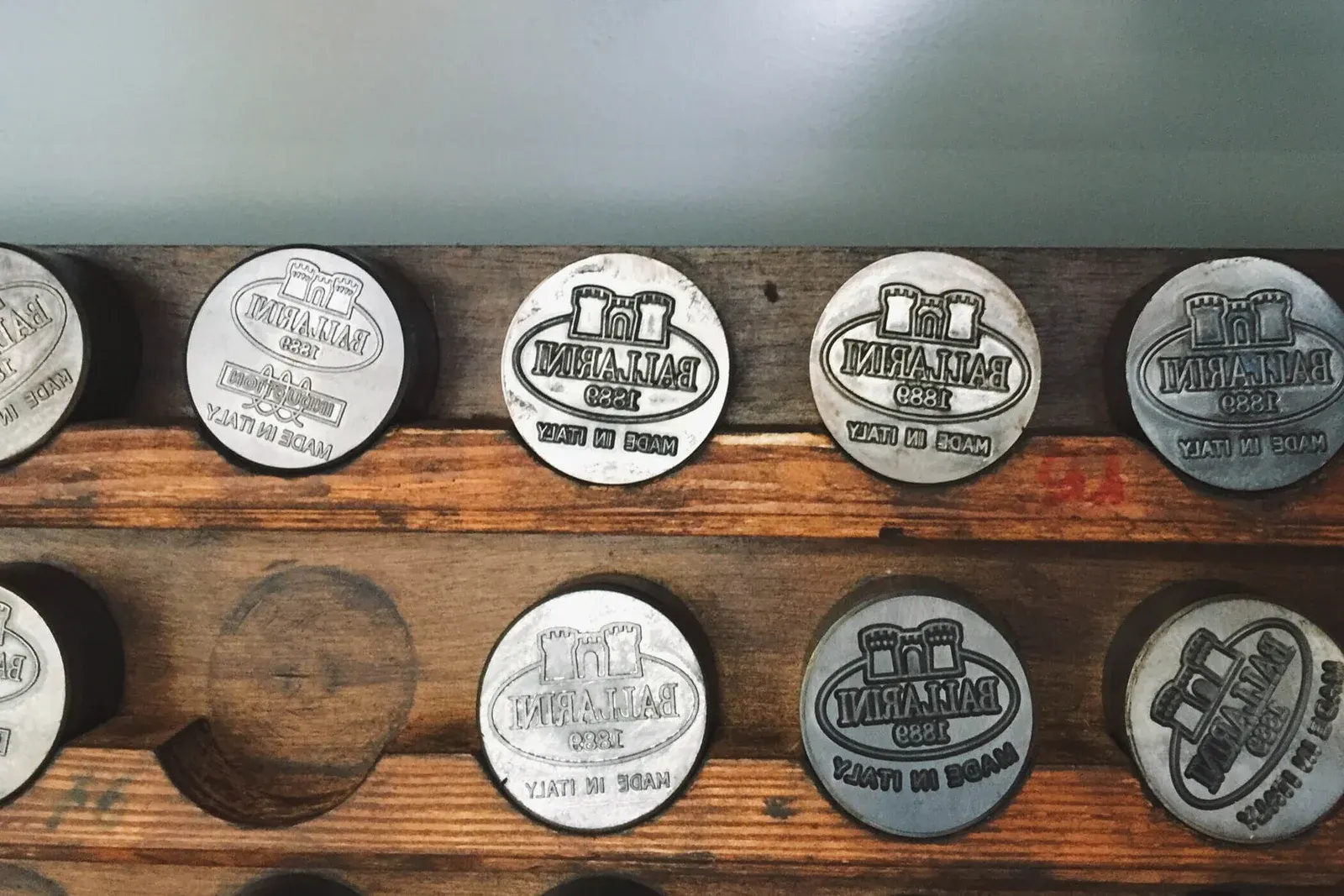
1889
It started with metal, not pans.
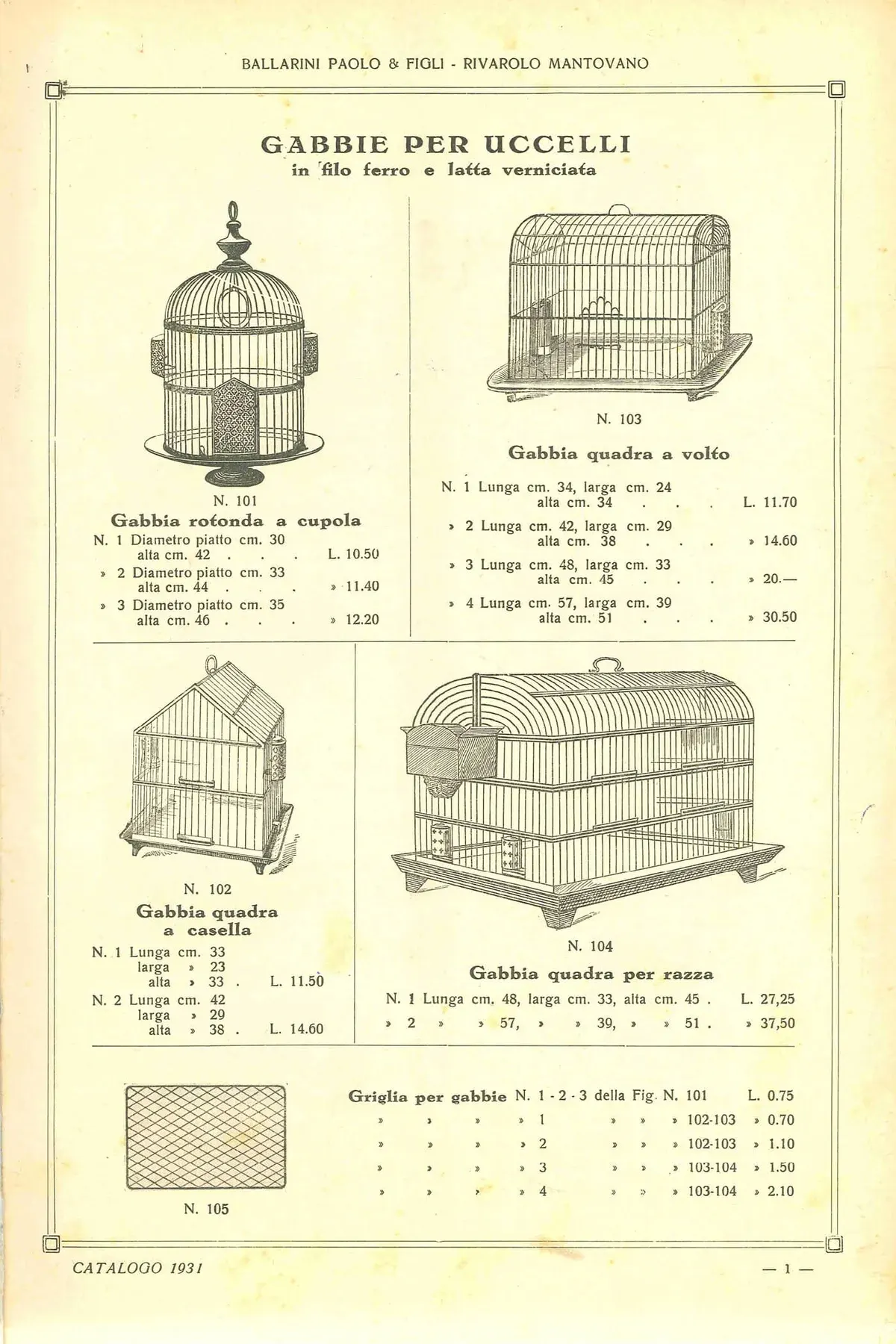
Paolo Ballarini and his sons opened a metal workshop in Rivarolo Mantovano in 1889. A 1931 price list from the workshop advertises bird cages, not cookware. The family made what the town needed from sheet metal, and learned to shape it well.
Cookware came later. The skills did not change much: cut, press, form, finish. A pan is a simple object. Making one that heats evenly for twenty years is not.
The mark
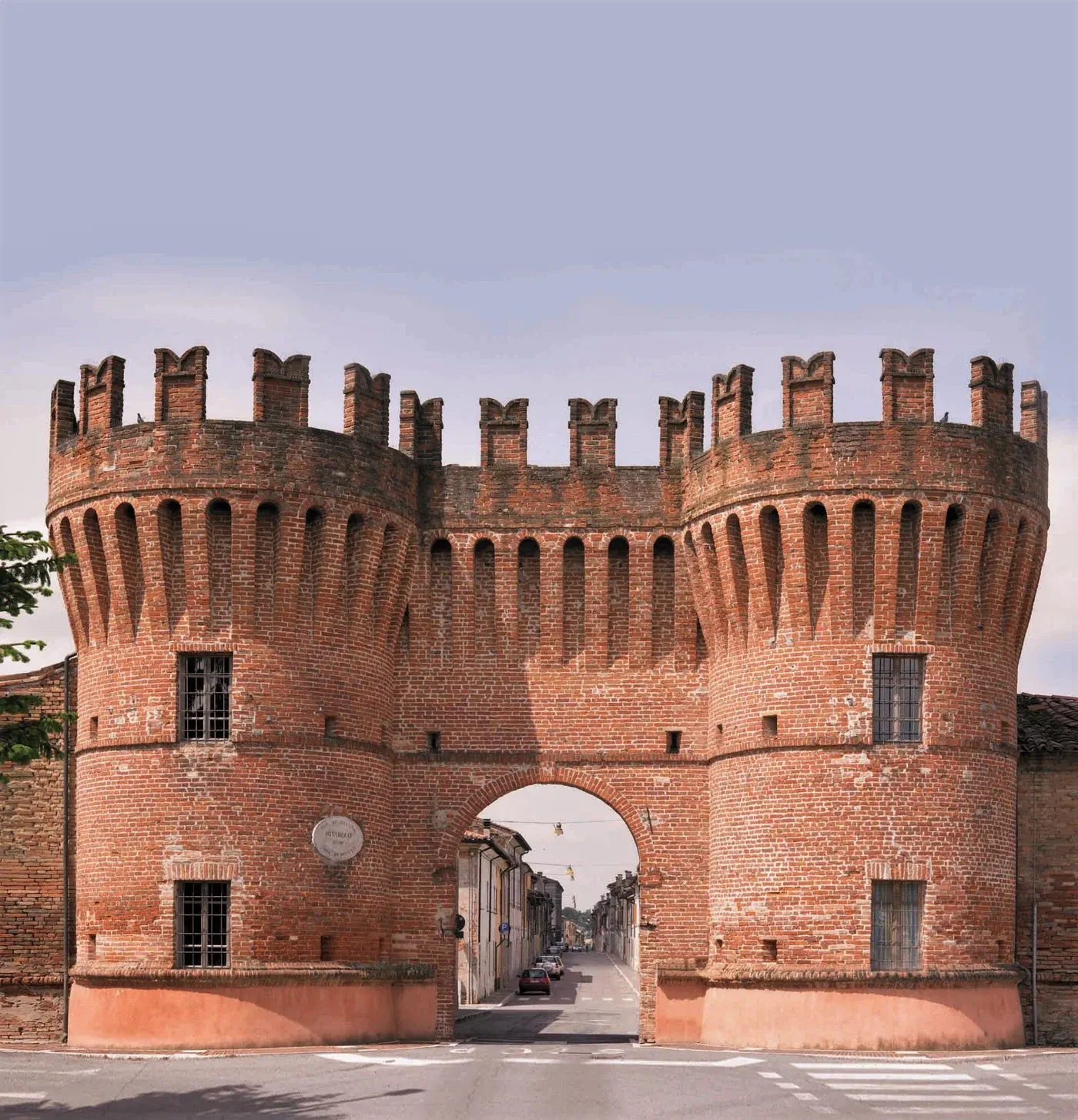
The gate is still there.
The castle gate in the Ballarini mark stands at the entrance to Rivarolo Mantovano. It was built as a defence; now it is the way into town. Every pan that leaves our workshop carries it.
We did not invent a symbol for the brand. We used the one at the end of the street.
Today
Same town. Different pans.
We still make cookware in Rivarolo Mantovano. The range has grown: Granitium, ceramic, cast iron, carbon steel, knives and tools. The rule has not. A pan should work, not just look like it does.
That is why we put a heat indicator in a handle, why we publish care instructions instead of hiding them, and why we answer warranty questions ourselves.
How we work
Three things happen before a pan leaves.
The body
Aluminium is pressed and thickened at the base, so the pan holds heat instead of dumping it into one hot spot.
The surface
Granitium or ceramic coating is applied and cured. The coating is thin; the preparation underneath is what makes it stay.
The check
Handles, flatness and coating are checked batch by batch. A pan that wobbles on a flat hob does not leave.
What is the difference between Ballarini Parma and Modena?
Parma is our ceramic nonstick line: lighter, PFAS-free and best with silicone or wooden utensils. Modena uses Granitium, a mineral-reinforced nonstick coating on a thicker aluminium body, and is metal-utensil safe. Choose Parma for lighter pans and a ceramic surface; choose Modena for a heavier pan that takes daily knocks.
What is the warranty on Ballarini cookware?
Ballarini cookware carries a limited lifetime warranty against manufacturing defects. Normal wear, overheating, misuse and damage from abrasive cleaning are not covered. Keep your proof of purchase and write to [email protected] with photos of the issue; we will tell you what we can do.
Come and see
The workshop is still in Rivarolo Mantovano.
We do not run factory tours, but we do read every message. If you have a question about a pan, an order or a warranty, write to us.
Talk to us